BIRDWATCHING
|
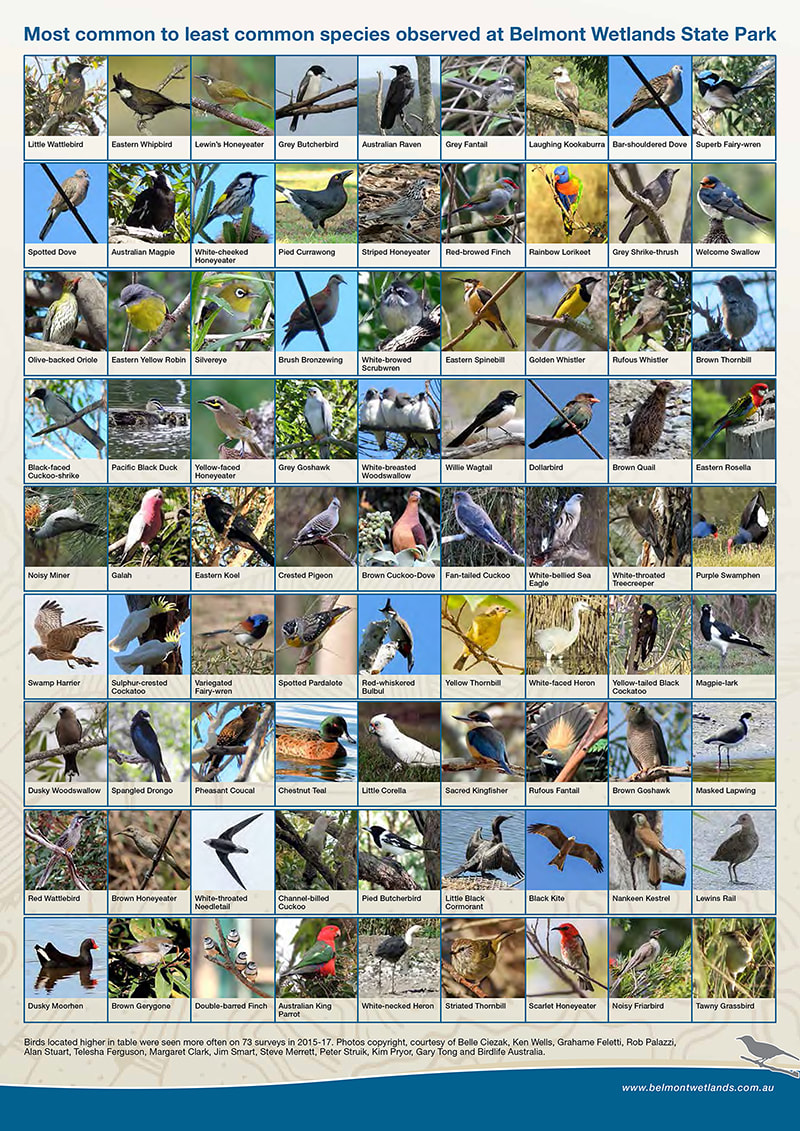
Belmont Wetlands State Park is a wonderful place to go birdwatching because seeing birds is easy, they are everywhere you look. The beauty of birdwatching is its free to be done anywhere and anytime you feel like it.
Watching birds can take on many different forms. For most people it is a relaxing pastime which allows them to head out into the fresh air and visit places they may not usually go. Some enjoy the freedom of solitude it can provide while others see it as a social experience, meeting with people who share a common interest. For others it is the lure of the chase which ignites their passion. Still others look upon birds as environmental indicators and use them to understand how the natural world is faring. Click below to read the full June 2024 bird report courtesy of Hunter Bird Observer Club.
_________________________________
The main birdwatching event at present is the Great (south-eastern) Honeyeater Migration. In April to May each year many thousands of small to medium-sized woodland birds can be seen flitting and twittering near treetop level on their autumnal migration north, from as far south as Tasmania and Victoria to warmer locations in NSW and Queensland for winter.
In the southern hemisphere this migratory behaviour has evolved over at least 55 million years. It’s just one of Australia’s great migration events. There are also over 50 species of shorebirds in Australia; most of them are migratory. Some species fly 25,000km from Australia to the Arctic and back each year. Amazing endurance! 
A Tawny Frogmouth was spotted during BWSP volunteers’ clearing of the Wildflower Walk this month. As a clever protective measure he has taken on the camouflage pose to mimic a branch.
Click the link below 👇 to read the full May 2024 bird report courtesy of Hunter Bird Observers Club. Also find out about joining the Club or attending monthly meetings. __________________________________Click below to read the full Mar 2024 bird report courtesy of Hunter Bird Observer Club. Click the button below to read the full Dec 2023 bird report courtesy of Hunter Bird Observers Club. Click the button below to read the full Nov 2023 bird report courtesy of Hunter Bird Observeres Club. Click the button below to read the full Oct 2023 bird report courtesy of Hunter Bird Observers Club. Click the button below to read the full Sept 2023 bird report courtesy of Hunter Bird Observers Club Click the button below to read the full Aug 2023 bird report courtesy of Hunter Bird Observers Club Click the button below to read the full July 2023 bird report courtesy of Hunter Bird Observers Club Click the button below to read the full June 2023 bird report courtesy of Hunter Bird Observers Club Click the button below to read the full May 2023 bird report courtesy of Hunter Bird Observers Club _________________________________
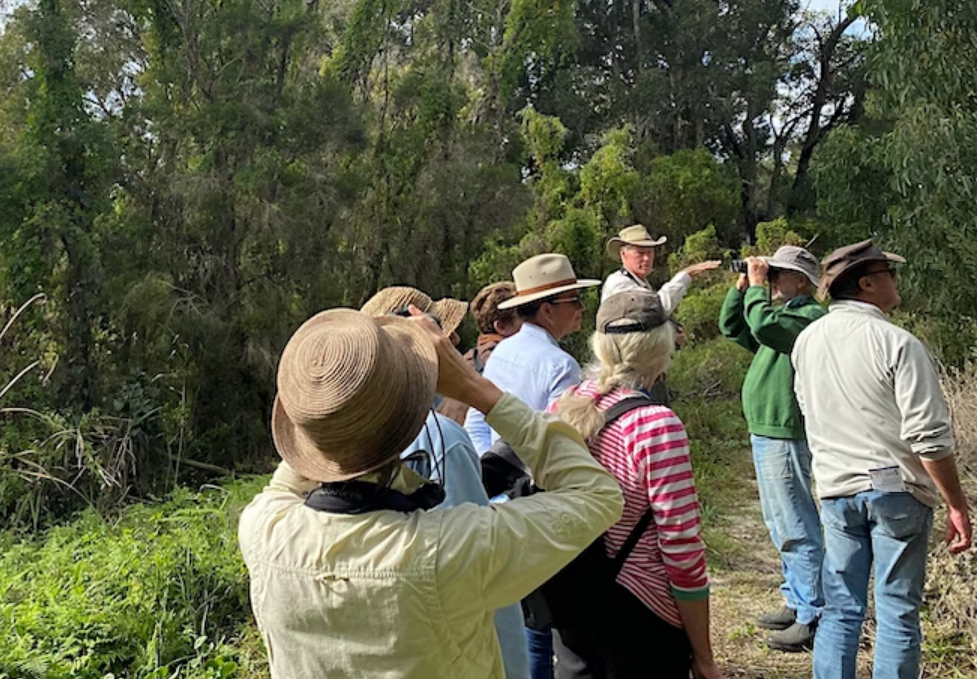
The Belmont Wetlands State Park (BWSP) Birdwatching Walk held on 20th April 2023 was well attended despite the rainy conditions. 18 keen local birdwatchers set out to enjoy the free and informative walk around the northern area of BWSP. A big thanks to our local guides led by Grahame Feletti and BWSP staff who provided commentary on the birds spotted and local history of the area. Future events will be scheduled and timed around when migration occurs in the Park and will hopefully become a quarterly event. So watch out for the next one and come along. Click the button below to read the full April 2023 bird report courtesy of Hunter Bird Observers Club __________________________________
| |||
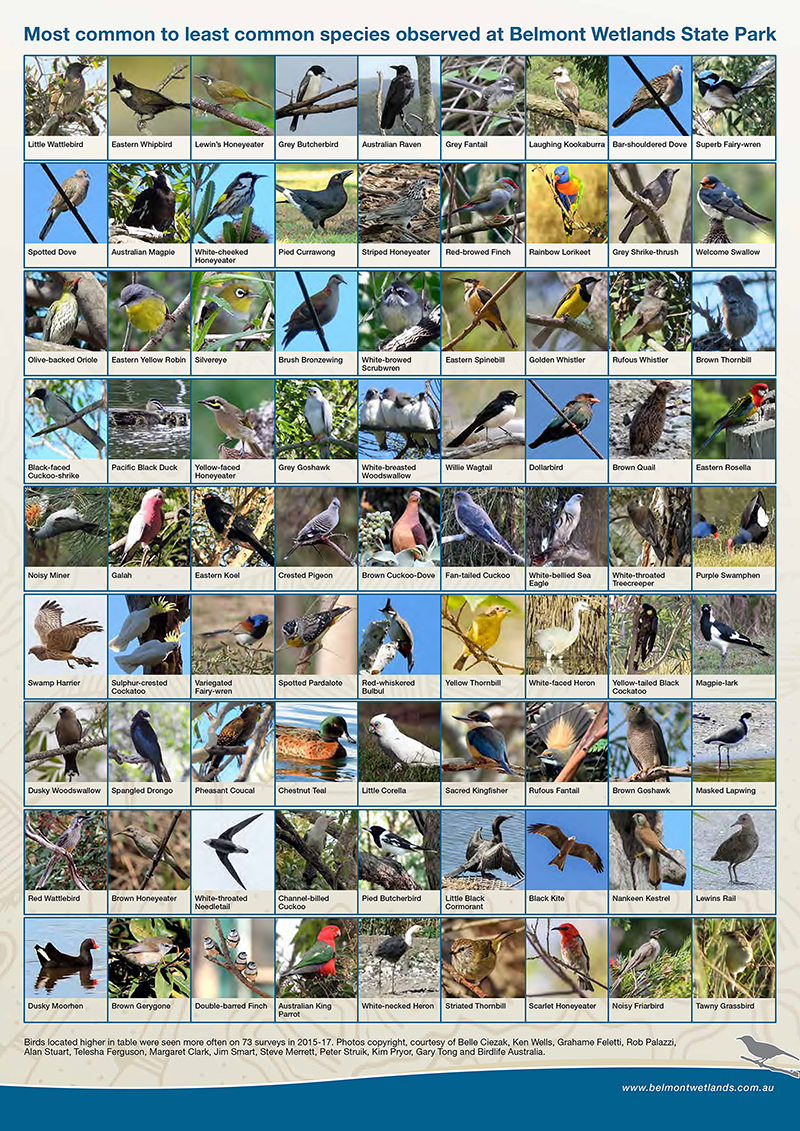
| Local Birds Guide |